
Coach Mick's Definitive Guide to the 3-2-2 Formation
 Mastering the 3-2-2 Formation in 8v8 Youth Soccer
Among the array of 8v8 formations that exist, one has captured the attention of coaches and players alike in recent years—the 3-2-2 formation. With-in the limitations of only having 7 players in teh field, this tactic embodies versatility, giving us the tools to take charge of the game and leave our opponents guessing. With this formation, we can unlock a world of possibilities and showcase our full potential on the field.
There are various formations that can be effective in an 8v8 soccer game, and the best formation for a team depends on the players’ strengths, playing style, and the specific game situation.
We typically play in a 3-2-2 formation for its balanced structure with a solid defensive line, midfield presence, and attacking options. However, it’s important to adapt the formation to suit the team’s strengths and adjust the positioning and roles based on the specific players available. Additionally, effective communication and understanding among teammates are crucial for this or any other formation to succeed.
Our Formation: 3-2-2
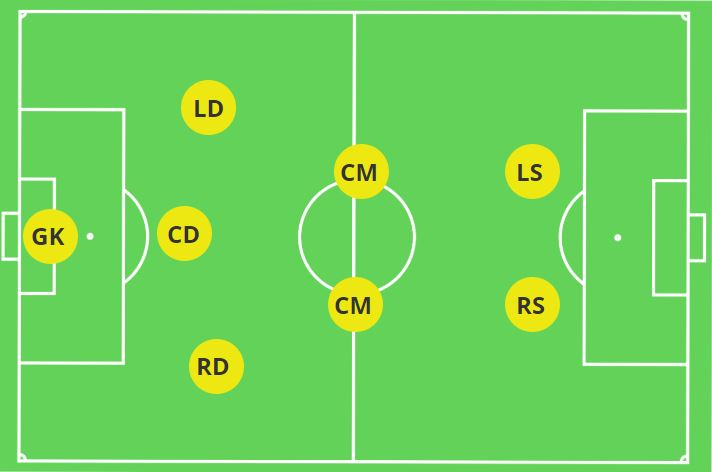
The 3-2-2 formation teaches everything important including strikers offering support to each other, central midfielders providing the balance of the team and defenders who can be responsible for not only cleaning up messes but covering in both wide and central areas. This particular formation may be subject to leave a big gap in wide areas, so the central midfielders are required to do a lot of running and lateral shifting. If they don’t, or they get caught too high, the defenders have to step up.
Positions and Roles
Goalkeeper:
The goalkeeper remains in the same position as in regular 11v11 soccer, focusing on shot-stopping, organizing the defense, and distributing the ball.
Defenders (3):
- The three defenders form a defensive line, consisting of a center-back and two full-backs.
- The center-back stays centrally and acts as the anchor of the defense, responsible for marking and intercepting.
- The full-backs provide width on the flanks, supporting both defensive and attacking duties.
Midfielders (2):
- The two central midfielders play in the center of the pitch, covering both defensive and offensive roles.
- They should possess good passing ability, vision, and be comfortable in tackling and winning the ball.
- One midfielder can take a more defensive role, shielding the defense, while the other can focus on creating opportunities and linking play with the forwards.
Forwards (2):
- The two forwards operate in more advanced positions, aiming to score goals and create chances. They need to have good movement, awareness, and finishing ability.
- One forward can act as the main striker, while the other can provide support by making runs into space or dropping deeper to link play.