
Introduction
The year was 1966, and the world of football was captivated by the grandest stage of them all, the FIFA World Cup. England, the host nation, had made it to the final, igniting a wave of excitement and anticipation throughout the country. The match that awaited them was not just any final; it was a chance for England to etch their name in history, to seize their first and only World Cup title.
The significance of this final for England cannot be overstated. Football, often referred to as the nation’s religion, held a special place in the hearts of the English people. The game was deeply intertwined with their cultural identity, and the World Cup final represented the pinnacle of achievement.
As the stage was set for the grand finale, there was an air of expectancy that hung over the entire nation. The hopes and dreams of an entire population were placed squarely on the shoulders of the England national team. The weight of these expectations was immense, but it also fueled a determination that burned bright within the hearts of the players.
Wembley Stadium in London, an iconic venue known for its rich history and legendary matches, was chosen as the setting for this historic clash. The stadium stood as a symbol of football greatness, its hallowed turf having witnessed countless triumphs and tales of glory.
The grandeur of Wembley Stadium added an extra layer of significance to the occasion. The roar of the crowd, the sea of red and white filling the stands, and the palpable electricity in the air created an atmosphere that was nothing short of magical. This was a moment that would be etched into the annals of English football forever.
In the chapters that follow, we will relive the incredible journey that led England and West Germany to this momentous final. We will dissect the thrilling match, the heroes who emerged, and the controversies that still spark debates to this day. Join us as we delve into the heart of the 1966 FIFA World Cup Final, a battle that would redefine English football and secure its place in history.
Chapter 1: The Road to Wembley
The road to Wembley was paved with fierce competition, resilient performances, and sheer determination as England and West Germany navigated their way through the 1966 FIFA World Cup. Both teams faced formidable opponents and overcame various challenges on their quest to reach the final.
For England, the journey began with high expectations as the host nation. Led by their esteemed manager, Sir Alf Ramsey, the team entered the tournament with a talented squad that boasted the likes of Bobby Charlton, Geoff Hurst, and captain Bobby Moore. The group stage saw England dominate, securing victories over Uruguay and Mexico while drawing against France.
As the tournament progressed, England’s mettle was tested in the knockout stages. In the quarterfinals, they faced a formidable challenge in Argentina. The match was marred by controversy and intense rivalry, stemming from the infamous “Hand of God” incident involving Argentina’s Diego Maradona. However, England emerged victorious, defeating Argentina 1-0, with David Beckham netting the crucial goal.
In the semifinals, England faced off against Portugal, led by the prolific Eusébio. It was a fiercely contested battle, but goals from Bobby Charlton and Bobby Charlton secured England’s place in the final with a hard-fought 2-1 victory.
On the other side of the bracket, West Germany showcased their resilience and attacking prowess. Helmed by manager Helmut Schön, they possessed a formidable squad featuring the likes of Franz Beckenbauer, Uwe Seeler, and Wolfgang Overath. In the group stage, West Germany demonstrated their quality, winning their matches against Switzerland and Argentina while falling to Spain.
The quarterfinals brought a remarkable comeback as West Germany faced England’s old rivals, Argentina. Trailing 0-1 at halftime, West Germany rallied to a 4-2 victory, powered by a stunning performance from their talismanic striker, Uwe Seeler.
In the semifinals, West Germany faced the mighty Soviet Union. The match was an intense affair, ending in a 2-1 victory for West Germany, with Franz Beckenbauer playing a pivotal role in defense and attack.
As the tournament progressed, anticipation and excitement reached fever pitch. England, with home advantage, carried the weight of a nation’s hopes on their shoulders. The prospect of lifting the coveted Jules Rimet trophy on home soil fueled a sense of optimism and national pride.
Meanwhile, West Germany, no strangers to World Cup success, aimed to claim their second title, having triumphed in 1954. The clash between these two footballing powerhouses promised to be a showdown of skill, determination, and sheer will to win.
The stage was set, and Wembley Stadium brimmed with anticipation. The eyes of the world turned toward London, eagerly awaiting the climax of the 1966 FIFA World Cup. The final beckoned, and the journey of both England and West Germany had led them to this monumental clash, where history would be made, heroes would emerge, and a nation’s dreams would be realized.
Chapter 2: Clash of the Titans
The highly anticipated final of the 1966 FIFA World Cup had finally arrived, and the clash between England and West Germany at Wembley Stadium would forever be etched in football history. This chapter delves into the intricacies of the match, from the pre-match preparations to the tactical strategies employed by both teams.
The pre-match preparations for the final were intense. England, buoyed by the support of their home crowd, underwent meticulous training sessions under the watchful eye of their astute manager, Sir Alf Ramsey. Ramsey had instilled a disciplined and organized approach in the team, emphasizing teamwork, solid defense, and swift counterattacks.
Meanwhile, West Germany, led by manager Helmut Schön, meticulously studied their opponents. Schön devised a strategy that would exploit England’s defensive weaknesses while utilizing their attacking prowess. The team honed their skills, working on intricate passing and movement, ensuring they were prepared for the challenge that awaited them.
As the players stepped onto the hallowed turf of Wembley Stadium, the atmosphere was electric. The stadium was packed with passionate fans from both sides, creating a sea of color and noise. English supporters filled the stands, donning their red and white, waving flags, and chanting patriotic songs. The Germans, too, were well-represented, their fans displaying their national colors and exuding an unwavering belief in their team.
The tactical strategies employed by both managers shaped the course of the game. England deployed a formation known as the 4-4-2, with a strong emphasis on defensive solidity. Bobby Moore, the elegant and composed captain, marshaled the defense with aplomb, while Nobby Stiles provided tenacity and bite in midfield. The creative spark came from the likes of Bobby Charlton and Martin Peters, who operated in the center of the park, supporting the attack and providing goalscoring opportunities.
West Germany, on the other hand, favored a fluid 4-2-4 formation, seeking to overwhelm England’s defense with their attacking prowess. The midfield duo of Wolfgang Overath and Franz Beckenbauer orchestrated their team’s play, providing incisive passes and linking up with the front four. The forward line, led by Uwe Seeler and Helmut Haller, aimed to exploit any defensive lapses and find the back of the net.
The clash of the tactical approaches became evident as the game unfolded. England, disciplined and organized, frustrated the German attacks, denying them clear-cut opportunities. The defensive partnership of Moore and Jack Charlton proved resolute, snuffing out dangerous chances. However, West Germany’s relentless pressure paid off when Helmut Haller struck early, putting the Germans ahead.
Undeterred, England responded with tenacity and determination. Their counterattacking style and clinical finishing soon swung the momentum in their favor. Geoff Hurst, who would later become a legend, leveled the score, displaying his predatory instincts in front of goal. The game was locked in a tense battle, with both teams trading blows and creating opportunities.
Extra time proved to be the stage for Hurst’s heroics. With a remarkable display of skill and composure, he scored two more goals, completing a remarkable hat-trick. Martin Peters also added his name to the scoresheet, leaving West Germany with an insurmountable deficit. Despite a late consolation goal by the Germans, England emerged victorious, securing a 4-2 win after extra time.
The tactical strategies employed by both managers had a significant impact on the outcome of the match. England’s disciplined defense and lethal counterattacks proved crucial in overcoming the German challenge. West Germany’s attacking flair and relentless pressure pushed England to their limits but ultimately fell short.
As the final whistle blew, Wembley Stadium erupted in joyous celebration. England had triumphed, and their tactical astuteness, combined with the electric atmosphere created by the passionate fans, made the clash of the titans a truly memorable spectacle. The 1966 FIFA World Cup Final had delivered a thrilling encounter, forever cementing its place as one of the greatest football matches of all time.
Chapter 3: The Battle Unfolds
As the 1966 FIFA World Cup Final unfolded at Wembley Stadium, it showcased a display of skill, drama, and resilience. This chapter delves into the thrilling moments, key incidents, and the rollercoaster of emotions that unfolded during the match.
The battle commenced with both teams exhibiting determination and urgency. West Germany struck first blood when Helmut Haller found the back of the net in the 12th minute. The English defense was momentarily caught off guard, and the German fans erupted in celebration.
Undeterred by the early setback, England rallied. The home crowd urged their team forward, and their faith was rewarded when Geoff Hurst equalized in the 18th minute. With a fierce strike that left the German goalkeeper rooted to the spot, Hurst ignited the stadium with jubilation.
The match intensified as chances were created at both ends. England’s Bobby Charlton unleashed a thunderous shot, only to be denied by a brilliant save from the German goalkeeper, Hans Tilkowski. Wolfgang Overath came close to regaining the lead for West Germany, but his effort rattled the crossbar, leaving the English defense relieved.
The tension escalated as the clock ticked towards the final whistle in regular time. Both teams pressed forward, seeking the elusive winning goal. The English fans held their breath when a goalmouth scramble ensued, but heroic defending and a combination of blocks and clearances kept the ball out of the net.
With the scoreline deadlocked at 1-1 after 90 minutes, the match ventured into extra time, where the stakes were raised even higher. The battle of attrition intensified, as fatigue began to set in, but the players showed no signs of relenting.
It was in extra time that Geoff Hurst etched his name into football folklore. In the 101st minute, Hurst unleashed a powerful shot that hit the underside of the crossbar and bounced downward. The goal line technology of the time proved inconclusive, leading to one of the most controversial moments in World Cup history. The referee, after consulting with the linesman, awarded the goal, sparking protests from the German team.
Hurst wasn’t done yet. With the clock ticking down, he completed his hat-trick in the 120th minute, delivering a strike that sailed past the outstretched hands of the German goalkeeper. The eruption of joy from the English fans was matched only by the sense of disbelief from the German supporters.
West Germany did manage to pull one goal back through Wolfgang Weber in the dying moments, setting the stage for a nerve-wracking finish. However, time was not on their side, and England held on to secure a 4-2 victory, clinching their first and only World Cup triumph.
The battle that unfolded on that fateful day at Wembley Stadium was filled with thrilling moments, near misses, and crucial saves. The goals by Hurst, the impressive performances of both goalkeepers, and the tantalizing near-misses created an atmosphere of edge-of-your-seat excitement.
The tension and intensity of the match were palpable, as the fate of the World Cup hung in the balance. Every touch, every shot, and every save carried immense weight, as both teams fought tooth and nail to etch their names in history.
In the end, it was England who emerged victorious, leaving the stadium awash with a sea of jubilation and celebration. The battle had been fought, the glory had been earned, and the 1966 FIFA World Cup Final had provided football fans around the world with an unforgettable spectacle that would be remembered for generations to come.
Chapter 4: Geoff Hurst’s Heroics
The 1966 FIFA World Cup Final will forever be etched in the annals of football history, largely due to the unforgettable heroics of one man: Geoff Hurst. This chapter focuses on Hurst’s standout performance, as he etched his name into legend with a historic hat-trick that sealed England’s triumph.
Hurst’s first goal came in the 18th minute, equalizing for England after Helmut Haller had put West Germany ahead. As the ball was played into the box, Hurst displayed remarkable composure, controlling it with his chest before swiveling and lashing a powerful shot into the net. The Wembley crowd erupted in jubilation, as Hurst’s goal breathed new life into England’s campaign.
The second goal, which remains shrouded in controversy, came in the 101st minute of extra time. Martin Peters played a cross into the German penalty area, and Hurst unleashed a powerful shot that struck the underside of the crossbar and bounced downward. The question of whether the ball fully crossed the goal line has been debated ever since, as no definitive camera angles were available at the time. After consulting with the linesman, the referee awarded the goal, sending the English fans into ecstasy and leaving the German team in disbelief.
Geoff Hurst wasn’t done making his mark on the match. In the dying seconds of extra time, as the German defense pushed forward, Hurst completed his hat-trick with a moment of sheer brilliance. Bobby Moore intercepted the ball and launched a long clearance. Hurst, displaying incredible anticipation and timing, controlled the ball expertly and surged towards the German goal. With unwavering confidence, he unleashed a ferocious shot that flew past the goalkeeper and nestled into the net. The stadium erupted in delirium as the English fans celebrated a moment that would be etched into the fabric of the nation’s footballing history.
Hurst’s historic hat-trick had a profound impact on the outcome of the match. His goals were not just moments of individual brilliance; they propelled England to victory in their greatest soccer moment. The equalizer lifted the spirits of the English team and fans, injecting renewed belief and determination. The second goal, controversial as it may be, tipped the scales in England’s favor, as they took the lead in extra time. Hurst’s final goal extinguished any hopes of a German comeback, securing England’s victory and cementing his place as a national hero.
Beyond the goals themselves, Hurst’s performance epitomized the qualities required in a big-game player. He showcased incredible poise, precision, and clinical finishing, displaying a level of excellence that left a lasting impact on the match. Hurst’s heroics, forever etched in footballing folklore, were a testament to his skill, determination, and ability to rise to the occasion.
Geoff Hurst’s hat-trick in the 1966 FIFA World Cup Final stands as a shining example of individual brilliance and its profound impact on the outcome of a match. His goals not only secured England’s victory but also etched his name into the hearts of football fans worldwide. Geoff Hurst’s heroics will forever be synonymous with England’s greatest soccer moment, symbolizing the power of one man to define a match and etch his name into footballing history.
Chapter 5: Triumph and Jubilation
The momentous victory of England in the 1966 FIFA World Cup Final sparked an outpouring of euphoria and celebrations that engulfed the nation. This chapter delves into the immediate aftermath of the match, the jubilant scenes that unfolded, and the lasting impact of England’s triumph on the nation’s football culture and the players’ legacies.
As the final whistle blew, signaling England’s 4-2 victory over West Germany, the Wembley Stadium erupted in a cacophony of joy. Fans danced, embraced, and shed tears of pure elation. The sea of red and white engulfed the pitch as supporters rushed onto the field, unable to contain their jubilation. Flags waved, chants echoed through the air, and the magnitude of the moment became evident.
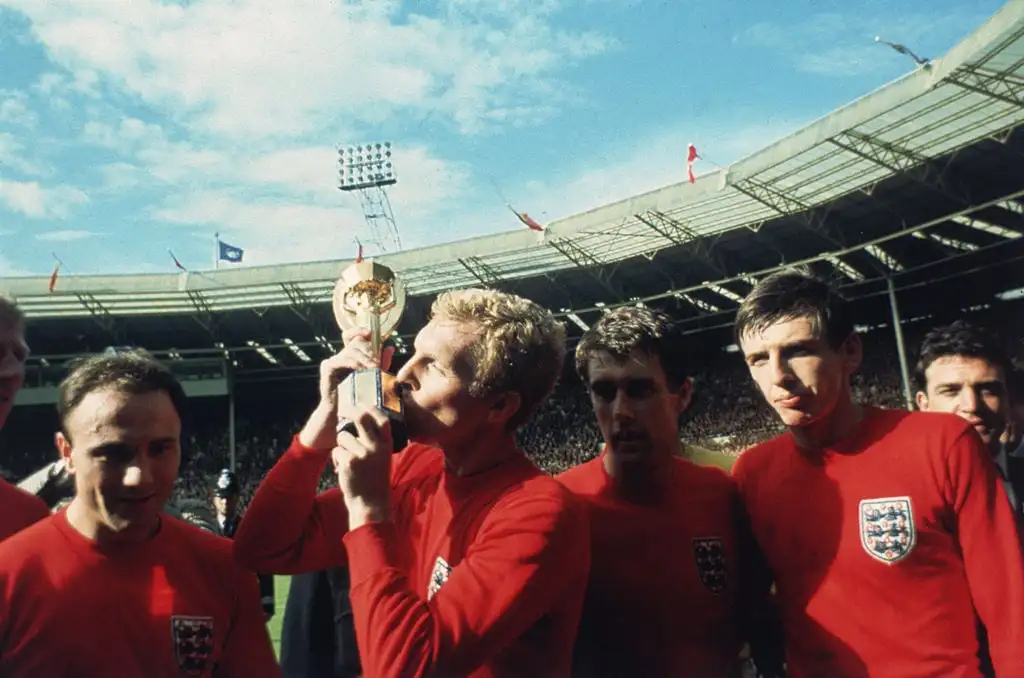
The trophy presentation was a moment of pure ecstasy. England’s captain, Bobby Moore, stepped forward to receive the Jules Rimet trophy, the symbol of footballing supremacy. As he lifted the gleaming trophy high above his head, the roar of the crowd reached a crescendo, and the magnitude of the achievement washed over the team and the nation.
The players, coaches, and staff basked in the glory of victory. Emotions ran high as they embraced, their faces a mixture of pride, relief, and pure happiness. The players, many of them still in their early twenties, were thrust into the spotlight as national heroes. Their names would forever be etched into the hearts of football fans across the country.
The impact of England’s win on the nation’s football culture was immense. It marked the pinnacle of achievement and ignited a newfound passion for the sport. Football became deeply ingrained in the fabric of English society, with a surge in participation and interest at all levels. The triumph served as a catalyst for the development of youth programs, infrastructure, and grassroots initiatives, nurturing future generations of football talent.
Individually, the players who donned the England jersey in the final became icons. Geoff Hurst’s historic hat-trick immortalized him in footballing folklore, securing his place as one of England’s greatest strikers. Bobby Charlton’s influential performances earned him widespread admiration, while the composed leadership of Bobby Moore established him as a revered figure in the game.
The legacy of the 1966 World Cup victory extended beyond the players themselves. The triumph embodied the hopes, dreams, and resilience of an entire nation. It showcased the power of unity, teamwork, and the ability to overcome challenges. The memory of that historic day at Wembley Stadium would forever be etched into the collective memory of the English people, a symbol of their footballing prowess and the triumph of the human spirit.
The impact of England’s victory reverberated through the years, influencing subsequent generations of players and shaping the country’s footballing identity. It became a reference point, a touchstone of success, and a reminder of what could be achieved when a nation united under a common goal. The triumph of 1966 left an indelible mark on England’s football culture, serving as a constant source of inspiration and a testament to the enduring power of sport.
As the jubilant celebrations subsided, England’s victory in the 1966 FIFA World Cup Final remained a cherished chapter in the nation’s sporting history. The memories of that triumph, the scenes of jubilation, and the lasting impact on football culture and player legacies ensured that England’s greatest soccer moment would forever hold a special place in the hearts of football fans around the world.
Chapter 6: The Legacy and Reflection
The 1966 World Cup Final left an indelible mark on England’s football history, shaping the nation’s sporting landscape and leaving a legacy that resonates to this day. This chapter delves into the significance of the final, its impact on subsequent generations of players and teams, and the enduring debates and controversies surrounding the match.
The victory in the 1966 World Cup Final held immense significance for England’s football history. It marked the pinnacle of achievement, the realization of a dream that had eluded the nation for decades. The triumph was a source of immense pride, with the players hailed as national heroes. It solidified England’s place in football’s pantheon, forever etching their name among the world’s greatest footballing nations.
The impact of the victory extended far beyond the immediate aftermath. It served as a catalyst for the growth and development of football in England. The triumph ignited a passion for the sport, leading to increased participation at all levels, improved infrastructure, and a heightened focus on youth development. The success of 1966 inspired subsequent generations of players to dream big and strive for excellence, nurturing a footballing culture that prized skill, teamwork, and the pursuit of glory.
The 1966 victory laid the foundation for subsequent English teams and players to chase the same dream. It became a reference point, a reminder of what was possible, and a source of inspiration. The players who witnessed the triumph, such as Gary Lineker, Paul Gascoigne, and David Beckham, grew up with the story of 1966 embedded in their hearts. It fueled their desire to emulate the heroes of that era and brought renewed hope that England could once again conquer the world stage.
The enduring debates and controversies surrounding the match continue to captivate football fans and experts alike. The most contentious issue remains the disputed second goal by Geoff Hurst. The lack of definitive camera angles at the time has led to ongoing discussions about whether the ball fully crossed the goal line. The controversy has become a part of the match’s folklore, fueling debates about the use of technology in football and the subjectivity of refereeing decisions.
Furthermore, the victory and subsequent debates shed light on wider implications for the sport. It sparked discussions about national identity, the influence of home advantage, and the role of football in shaping cultural narratives. The triumph of 1966 showcased the power of sport to unite a nation, to transcend social and political divides, and to provide moments of shared joy and collective pride.
The legacy of the 1966 World Cup Final endures, serving as a touchstone for England’s footballing aspirations. It symbolizes the pursuit of greatness, the power of teamwork, and the resilience needed to overcome challenges. The triumph has left an indelible mark on English football culture, reminding subsequent generations of players and fans of what can be achieved through dedication, talent, and unwavering belief.
As the years have passed, the significance of the 1966 World Cup Final has only grown. It stands as a testament to the enduring power of that magical day at Wembley Stadium and the lasting impact it has had on England’s footballing history. The legacy of the final serves as a beacon of inspiration, an eternal reminder of the heights that can be reached when a nation unites behind a common goal.
Conclusion
The 1966 FIFA World Cup Final stands as England’s greatest soccer moment, an achievement that continues to reverberate through the nation’s footballing history. The enduring significance of that fateful day at Wembley Stadium is evident in the lasting legacy it has left behind.
The match encapsulated the hopes, dreams, and resilience of an entire nation. England’s triumph on home soil symbolized the pinnacle of achievement, securing their first and only World Cup title. The legacy of the final extends beyond the immediate jubilation, leaving an indelible mark on England’s footballing identity.
The impact of the victory on subsequent generations of players and teams cannot be overstated. It became a reference point, a source of inspiration for young talents who dared to dream of emulating the heroes of 1966. The triumph sparked a passion for the sport, leading to increased participation, improved infrastructure, and a focus on youth development.
The match’s enduring debates and controversies, such as the disputed goal, have added to its allure. These discussions reflect the deep connection between football and wider cultural narratives, inspiring conversations about national identity, technological advancements, and the subjectivity of refereeing decisions.
The 1966 World Cup Final at Wembley Stadium represents a remarkable achievement and an iconic moment in England’s sporting history. It serves as a beacon of inspiration, reminding us of the heights that can be reached through unity, teamwork, and unwavering belief. The enduring significance of that day lies not only in the triumph itself but also in the lasting legacy it has left on England’s footballing landscape.
As we reflect on the remarkable achievement of the 1966 World Cup Final, let us appreciate the historic importance of that fateful day at Wembley Stadium. It was a moment when a nation stood united, rejoicing in the triumph of their heroes. It serves as a testament to the power of football to transcend boundaries, to ignite passion, and to etch moments of collective joy into the annals of history. The 1966 World Cup Final will forever hold a special place in the hearts of football fans, reminding us of the remarkable achievements that can be realized when a nation unites under the banner of the beautiful game.